
From Idea to Tiny Quarry Loco: Developing Our First De Winton Models
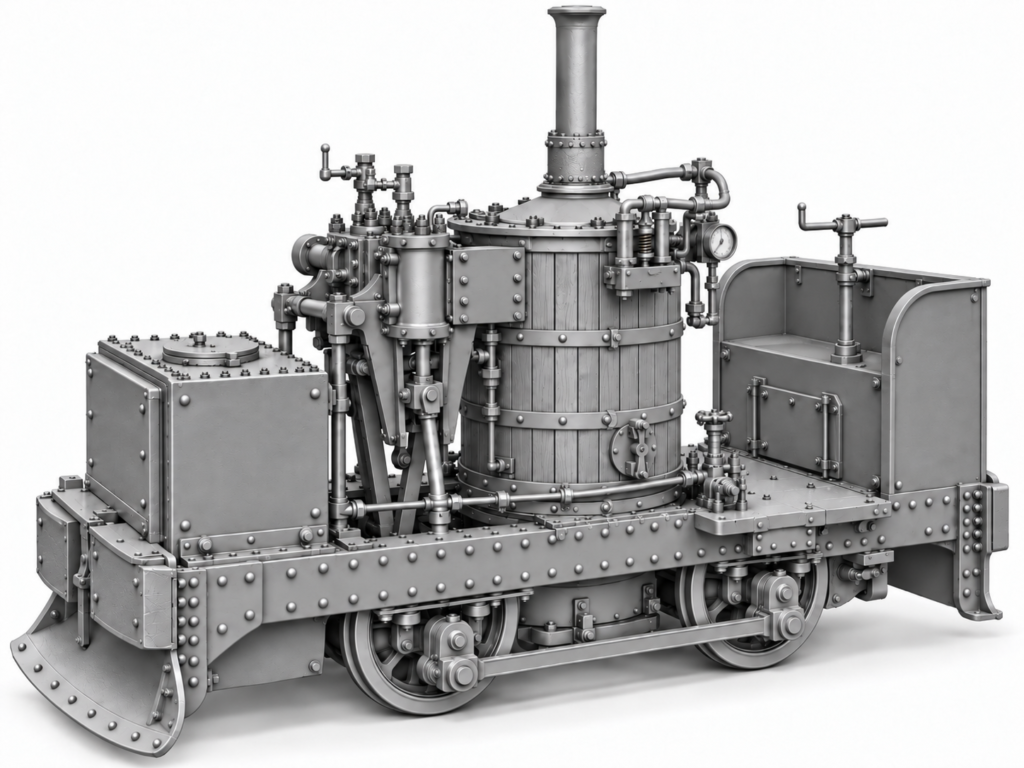
EBAY LINK DeWinton Style Vertical Boiler Loco 009 High Definition Resin – Toma chassis | eBay UK
After a long development process, the first in a new series of De Winton-style 009 locomotives is finally in the last stages of testing before release. The first two variants are planned to appear in our eBay store this weekend, and they represent the result of far more work than their tiny size might suggest.
At around 50 mm long and 22 mm wide, these are very small locomotives, but that was always part of the attraction. De Wintons have a character that is completely their own. The tall vertical boiler, small wheels, exposed mechanical parts, compact frame and slightly unusual proportions make them very different from the more familiar narrow-gauge saddle tanks and side tanks.
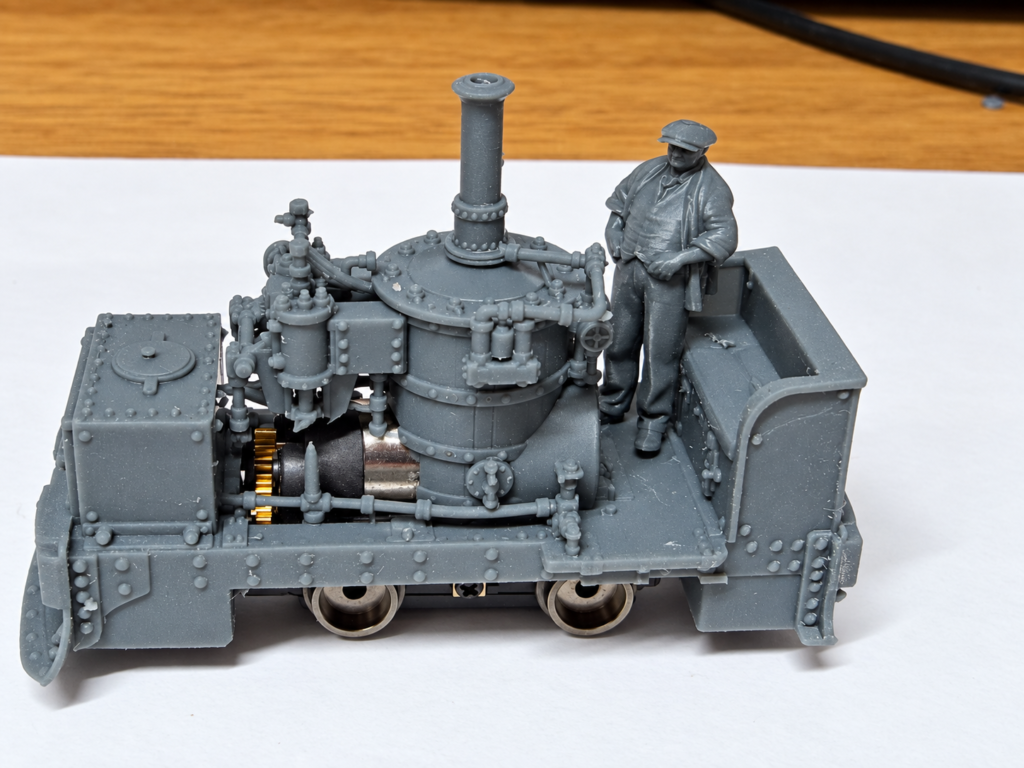
Variant one has clean sides with the gears of the Toma chassis visible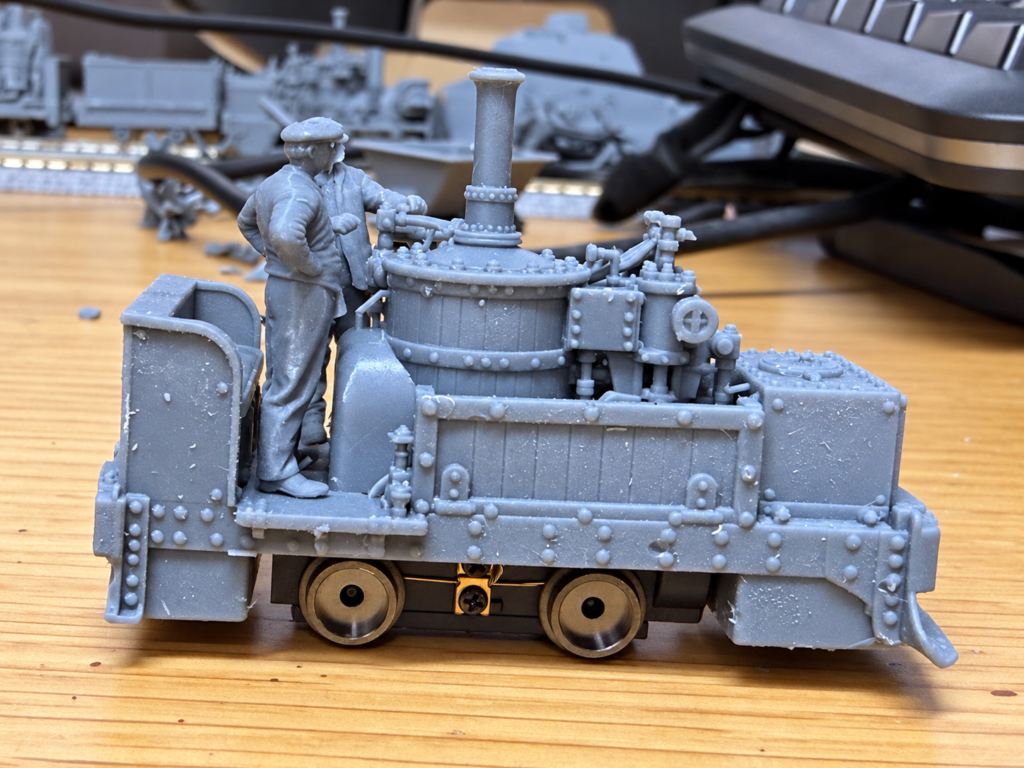
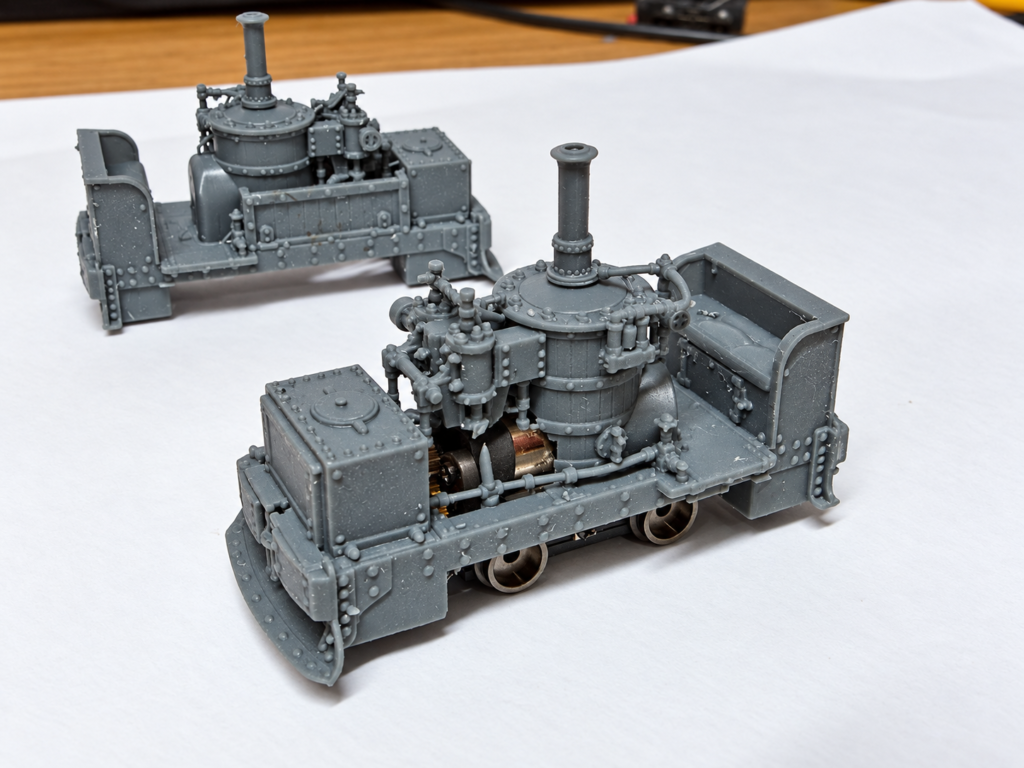
The challenge throughout development has been to preserve that character while still creating a practical 009 locomotive that can run reliably.
The first major decision was the chassis. After discussion and feedback from the modelling community, the design was developed around the Toma Model Works “Super Slow” 16 mm wheelbase drive unit with 6 mm wheels.
The chassis is available directly from Toma Model Works here:
[2months] 9mm gauge, Super slow drive unit, RTR – Toma Model Works’ Web Shop
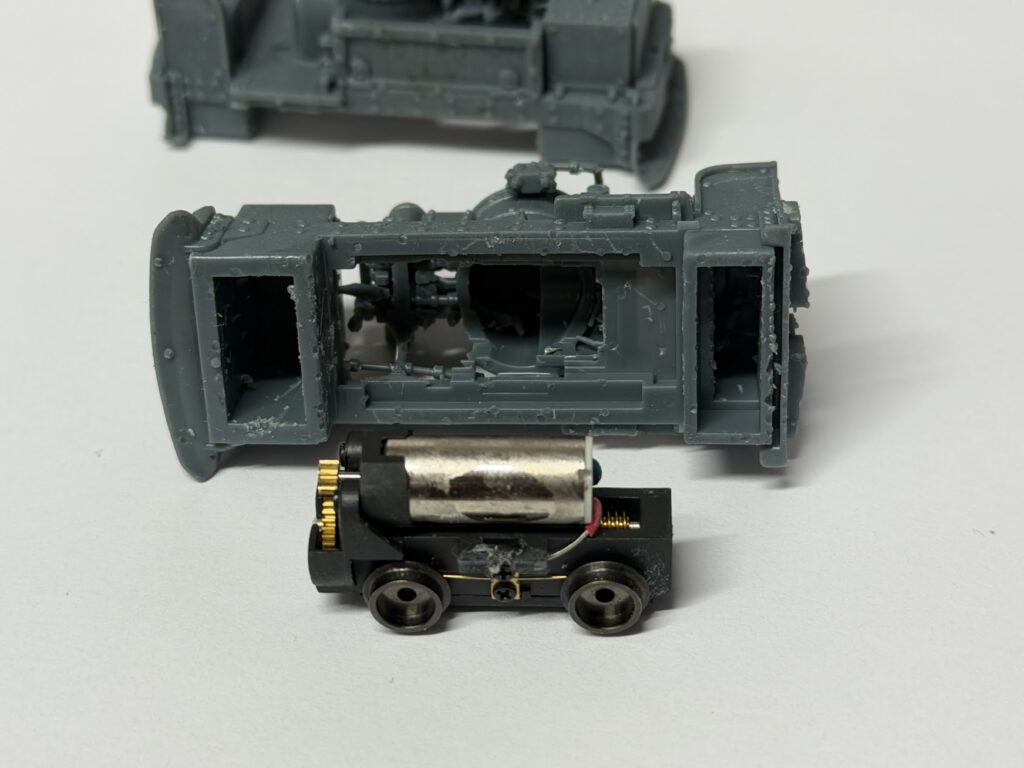
It proved to be a very good starting point because a De Winton-style locomotive really should not be racing around the layout. These were small industrial and quarry locomotives, and very slow, controlled running suits the character of the model far better than outright speed.
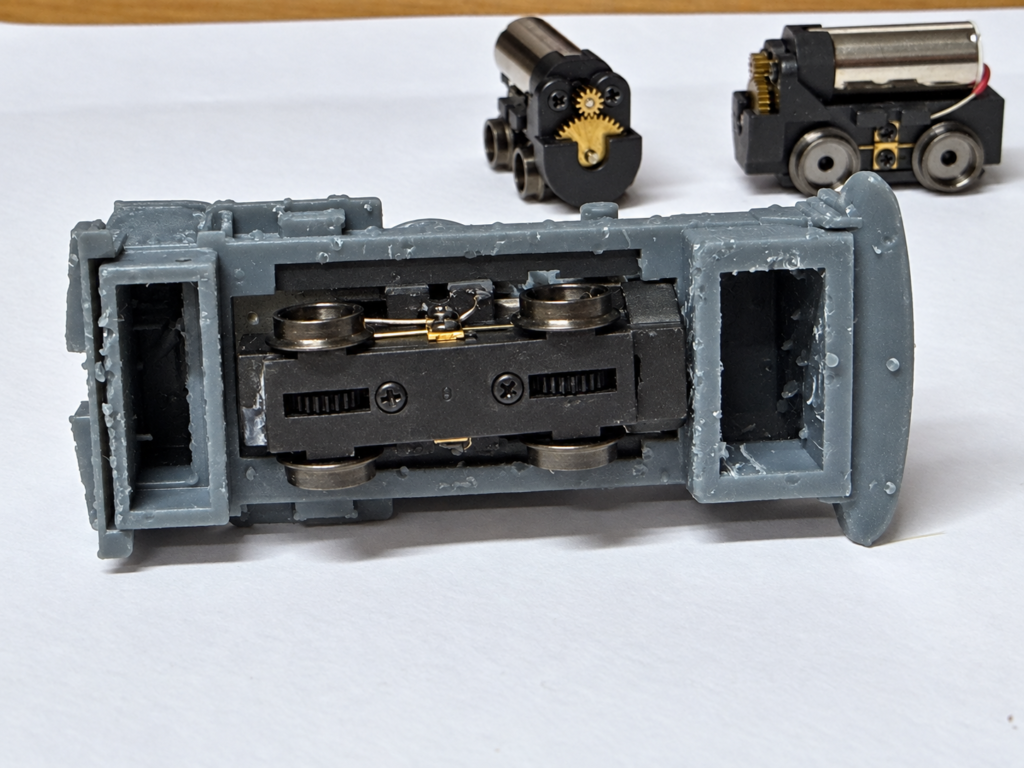
The Toma chassis can also be fitted with driving rods, which are available separately from Toma Model Works. Visually, these make a big difference. On such a small locomotive, visible motion around the wheels helps recreate the exposed, mechanical appearance that makes De Wintons so appealing.
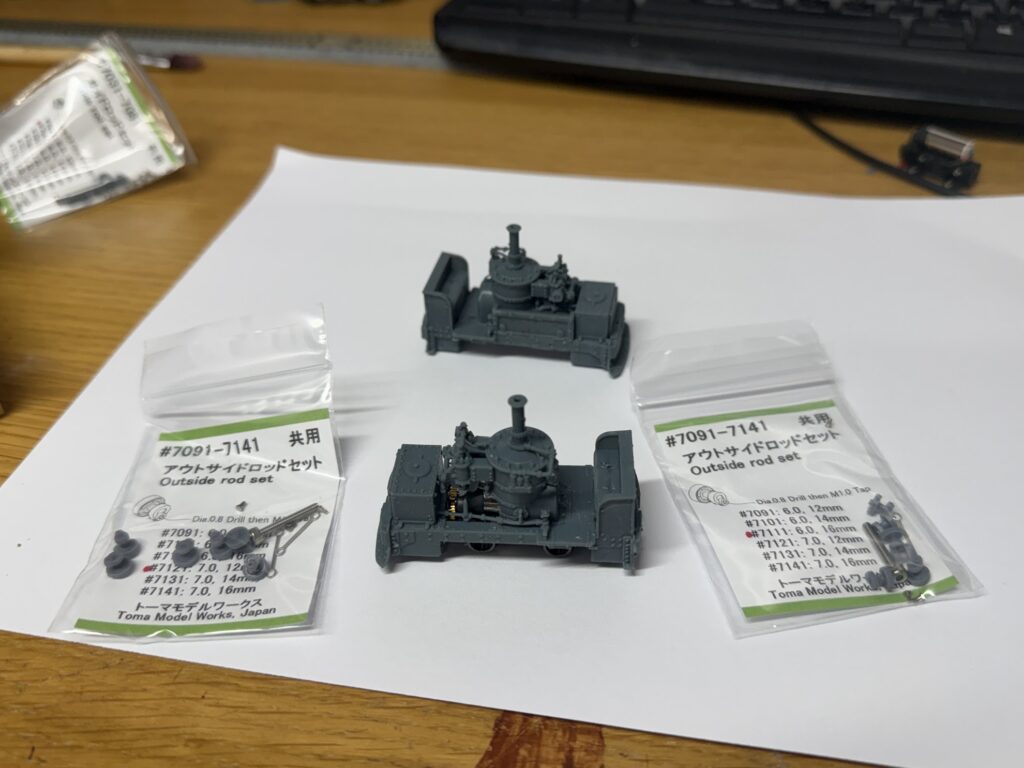
Designing the body around the chassis sounds straightforward, but in practice it has been one of the most difficult parts of the project. Real De Winton locomotives were exceptionally compact, and their short wheelbases and narrow frames are a major part of their appearance. A modern 009 motor, gearbox and wheel arrangement still need somewhere to go, so simply scaling a locomotive drawing down and placing it over the mechanism was never going to work.
The easy option would have been to make the body larger until the chassis disappeared inside it, but doing that would have ruined the proportions. Instead, much of the development has been about balancing realism with what can actually be accommodated in 009.
The boiler diameter, tank dimensions, chassis clearance, body width, wheel position and lower boiler profile have all gone through repeated revisions. There have been several generations of the model, each one improving the fit while trying to keep the locomotive looking convincingly De Winton.
The finished model is approximately 50 mm long and 22 mm wide. At 4 mm scale, that represents a real locomotive of around 12 ft 6 in long by 5 ft 6 in wide, or approximately 3.81 m by 1.68 m. That puts it close to the proportions of some of the larger De Winton locomotives, including Chaloner.
Chaloner, built in 1877, was roughly 12 ft 5 in long and a little over 5 ft wide. In 009 that works out at around 50 mm long by 21 mm wide, which gives a good indication of just how compact these machines really were. Other locomotives such as George Henry and Kathleen were of a similar overall character, although exact dimensions vary and historical records are incomplete.
The model is not intended to be a bolt-for-bolt replica of one particular surviving locomotive. It is better thought of as a De Winton-inspired locomotive designed specifically for 009, taking its proportions and details from the larger quarry locomotives while remaining practical as a working model.
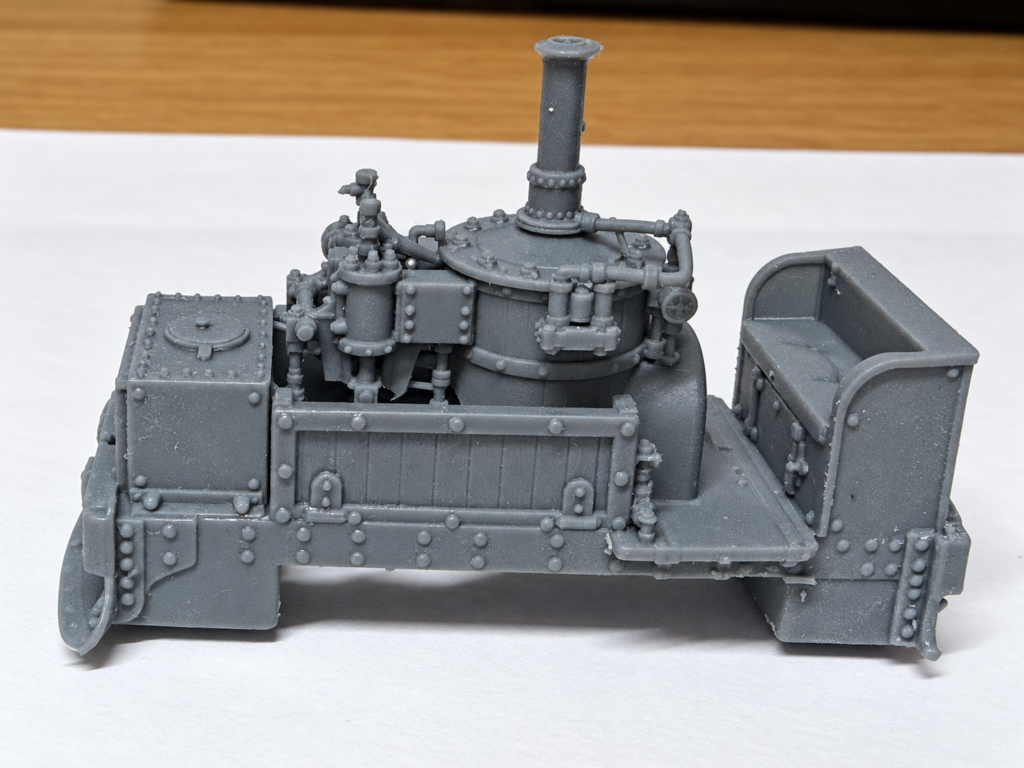
One of the first versions features a wooden-clad vertical boiler, which immediately gives the locomotive a strong Victorian industrial appearance. The timber cladding also gives plenty of scope for individual finishing, whether that means fresh timber, dark varnished boards, weathered planking or heavily soot-stained cladding.
Following feedback from the community, the first production models will be supplied unlined. That leaves far more freedom for builders to finish the locomotive to suit their own railway rather than forcing one particular livery.
One of the more difficult areas of the design was hiding the Toma mechanism without making the locomotive look oversized. The main boiler has therefore been hollowed internally so that part of the drive mechanism can sit within the body. The gearing occupies an area that, on the prototype, would have been associated with the cylinders and drive mechanism.
A small modification has also been made to the lower part of the boiler to provide the necessary clearance. Rather than leaving this as an obvious chassis cut-out, the shape has been incorporated into the design so that it can be painted and detailed to resemble part of the boiler access or firebox area. That sums up much of the philosophy behind the project: if a compromise has to be made, it should look intentional.
Weight is another important consideration with a locomotive this small. A light model may look fine, but extra mass makes a noticeable difference to traction, electrical pickup and slow-speed running. For that reason, the upper boiler, forward water tank and rear bunker area have been left hollow so that ballast can be added during assembly.
We have had good results using Liquid Gravity secured carefully with superglue. It is surprising how much weight can be hidden inside such a small body, and once ballasted the locomotive feels much more substantial and performs better on the track.
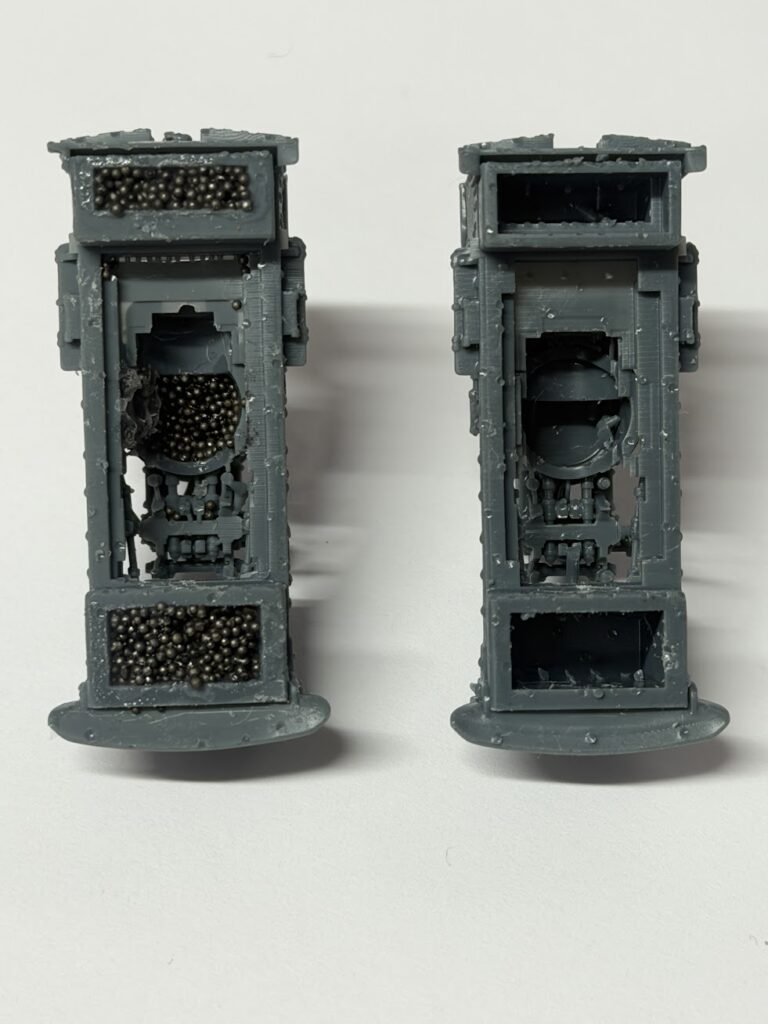
The production models are printed using Elegoo ABS-Like 8K resin on a 16K-resolution resin printer. That combination was chosen to give a good balance between fine detail, crisp edges and practical strength.
On a locomotive this small, the difference in print quality becomes very noticeable. Rivets, timber cladding, boiler fittings, panel lines, bolt heads and small mechanical details can disappear very quickly if the printing process is not sharp enough. The 16K printer allows much more of the original CAD detail to survive into the finished model, while the ABS-Like resin gives a little more toughness than a very brittle detail resin.
A lot of the development process has therefore been iterative. The model usually starts with historical photographs, known dimensions and the general proportions of real De Winton locomotives. The basic body is then built around those proportions before the Toma chassis is placed into the design.
That immediately shows where the prototype and the real mechanism are going to disagree.
From there, the body is reshaped around the chassis while constantly checking that the locomotive still looks right. Once the main form is working, the smaller details are added. The model is then printed, inspected, test fitted and modified again.
This print-test-modify cycle has been repeated a number of times. Some features that look perfectly fine on a computer screen are too fine when printed. Others need to be slightly exaggerated so that they remain visible after painting. Clearances need to be checked with the real chassis, not just the digital version, and small changes can make a surprising difference once the locomotive is sitting on actual track.
That last part is particularly important. A model can look perfect in CAD and still somehow look wrong once it is on rails. The relationship between the boiler, wheels, tank and bunker is what really gives a De Winton its character, so the final stages of development have been as much about visual balance as engineering.
One unexpected difficulty has been photographing the models.
At around 50 mm long, the detail is tiny, and my iPhone really does not do the finished prints justice. In person, the rivets, timber texture, boiler fittings and small mechanical features are much more obvious than they appear in the photographs.
Phone cameras are excellent for general photography, but at this scale they tend to flatten the model and lose some of the very fine surface detail. The physical 16K prints are noticeably sharper to the eye than many of the development photographs suggest.
I have reached the point where I really need a proper macro lens and a small photography setup just to show the models properly. So if some of the current photographs look a little softer than expected, the limitation is very much the photography rather than the print.
The project has also benefited enormously from community input. The choice of chassis, the decision to keep the first models unlined, the interest in optional driving rods and the emphasis on retaining realistic proportions have all been shaped by feedback during development.
That has made the process much more interesting, because it has helped keep the model focused on what narrow-gauge modellers actually want rather than simply what is easiest to draw.
The first two versions are only the beginning. The common chassis arrangement gives plenty of scope for different boiler treatments, cabs, weather protection, bunkers, fittings and other details while keeping the mechanical side familiar.
That suits De Wintons perfectly because the real locomotives were never completely uniform. Their appearance varied from railway to railway and quarry to quarry, which gives plenty of room to create a family of related models without making them all look identical.
The first two locomotives are now in final testing. At this stage the work is down to the last small clearances, print consistency, fit, ballast and running tests.
Assuming those final checks continue as expected, the first models will be released through our eBay store this weekend.
It has taken considerably longer to get here than the size of the locomotive might suggest, but that has been part of the enjoyment. Trying to squeeze a convincing Victorian quarry locomotive around a modern 009 mechanism, while keeping it detailed, printable, strong and capable of genuine slow running, has been a very satisfying challenge.
And at only 50 mm long, it proves that a small locomotive can still have a huge amount of character.
Leave a Reply