
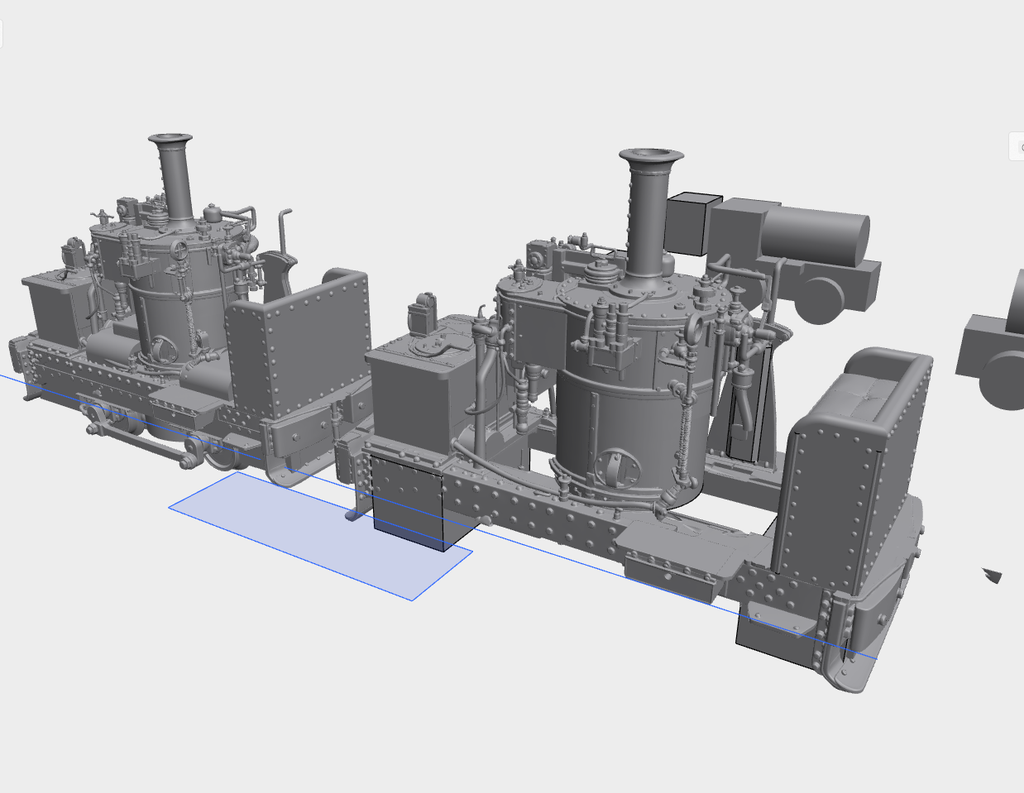
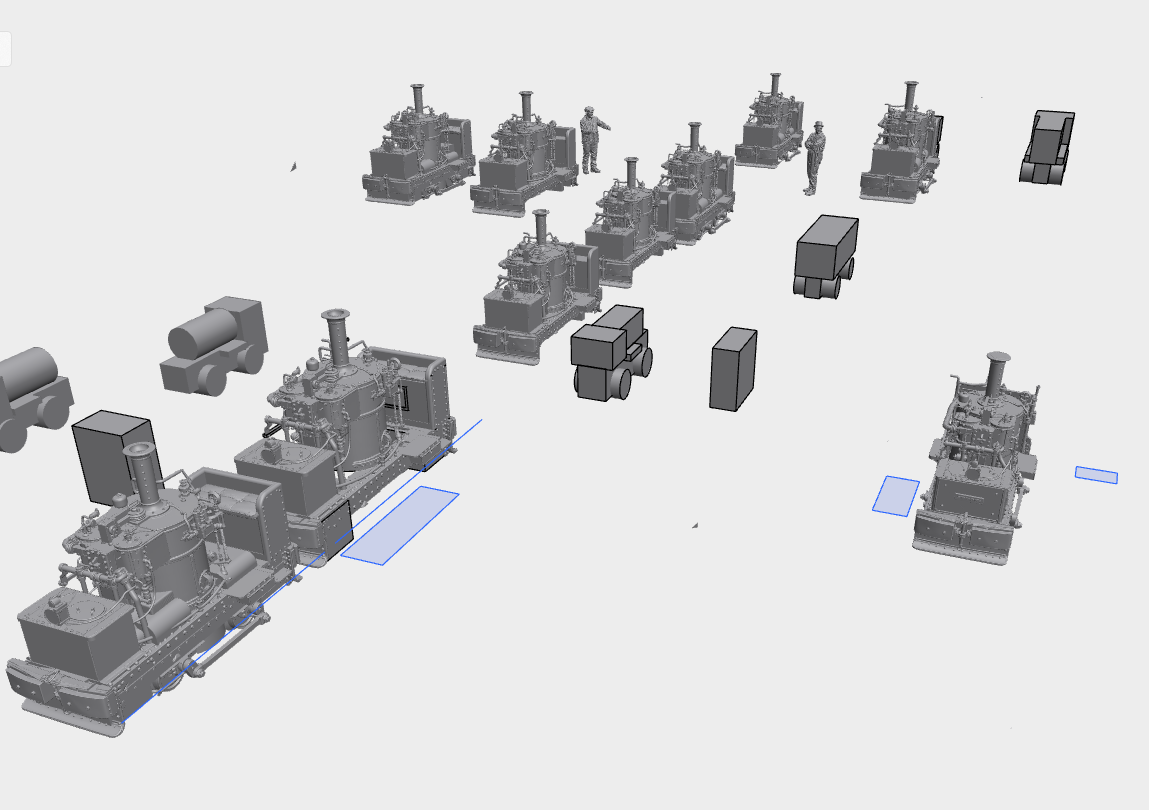
It is probably no secret by now that we have been spending a considerable amount of time working on a range of De Winton vertical-boiler locomotives and similar Vertical Boiler Locos. They have received a remarkable amount of attention over recent weeks, and the level of interest, suggestions and feedback from fellow narrow-gauge modellers has been fantastic.
There is a good reason these little locomotives generate so much enthusiasm. De Winton’s distinctive vertical-boiler locomotives are almost the perfect representation of the wonderfully unconventional engineering that makes industrial narrow gauge so interesting. Compact, unusual and full of visible mechanical character, they are instantly recognisable and lend themselves perfectly to quarry and industrial layouts.
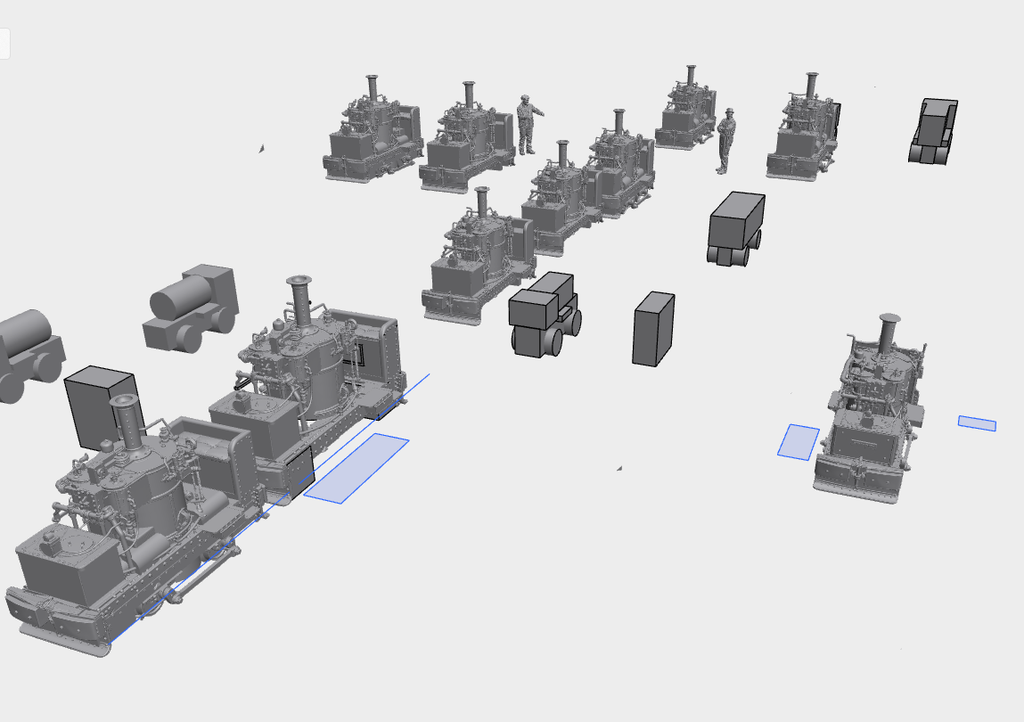
That compactness, however, is also what makes them challenging to reproduce as working OO9 models. One of the things we decided quite early in the project was that we did not want to create a single generic locomotive and simply call it a De Winton. The originals shared a common family resemblance, but there were variations between locomotives, so we are currently testing several different models and configurations intended to cover a broad range of requests.
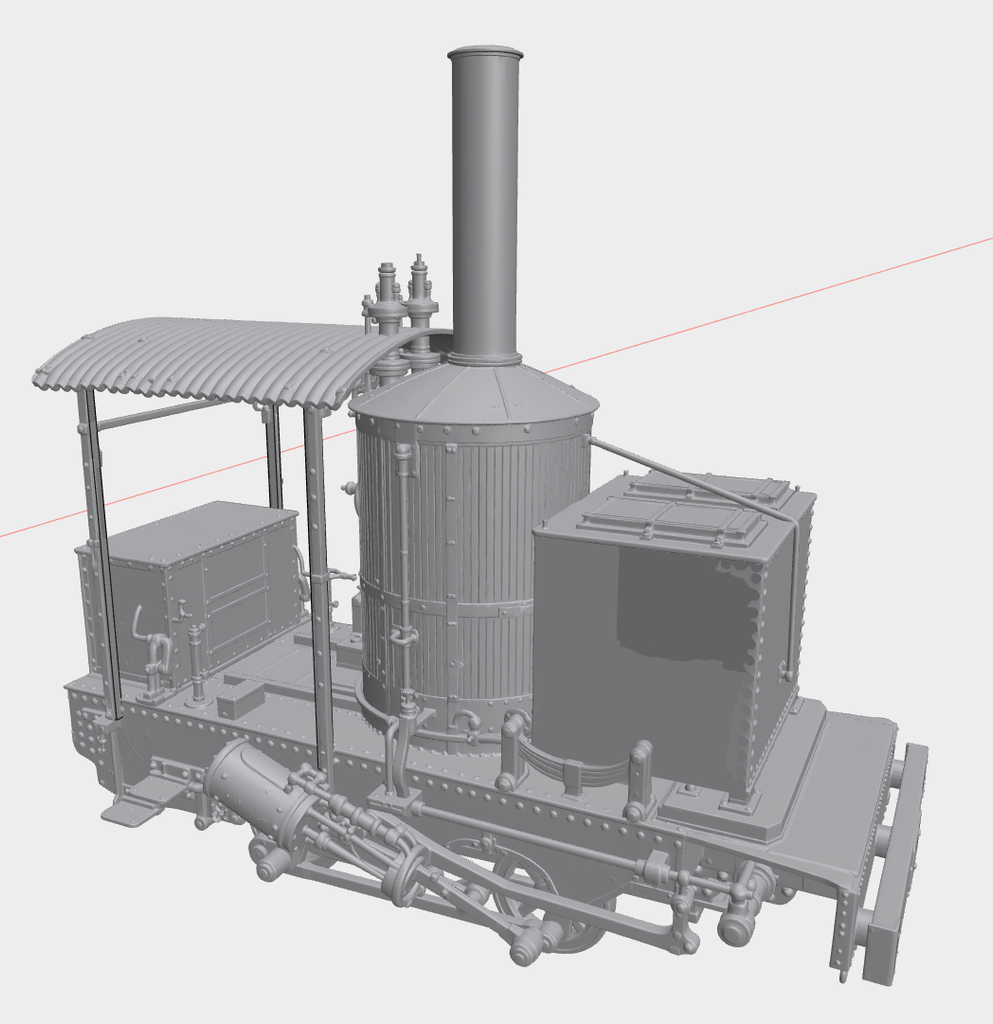
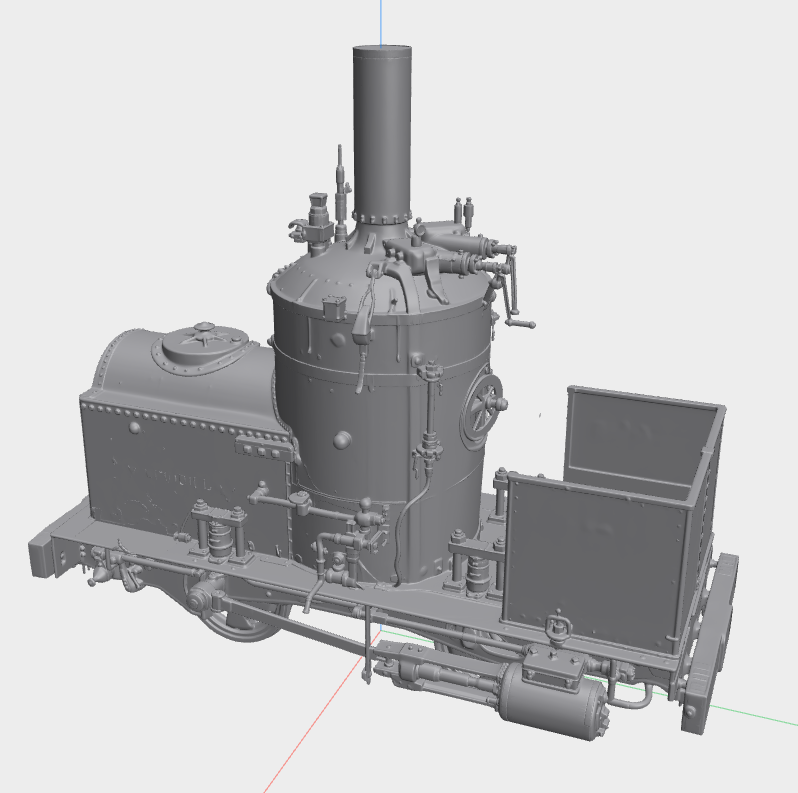
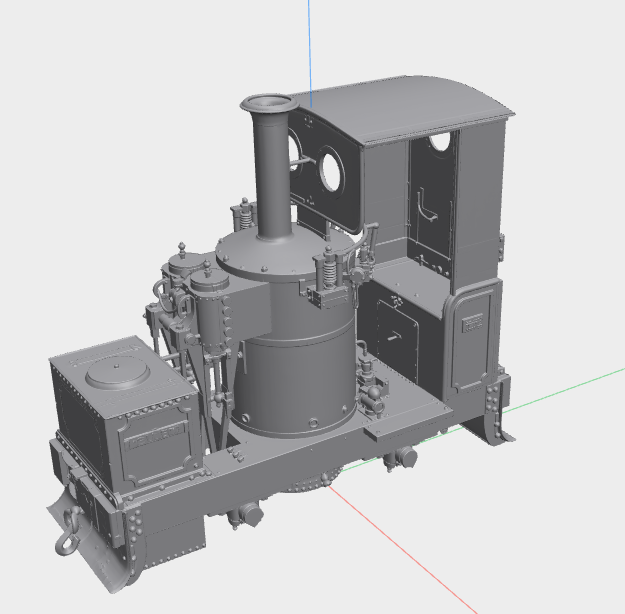
Most of the detailed modelling work is now substantially complete. Boilers, frames, tanks, controls, pipework, fittings and the exposed mechanical elements that give these locomotives their character have all been worked through in considerable detail. The biggest challenge now is deciding how best to make them work while retaining their exceptionally small proportions.
Choosing the Right Chassis
At this scale, choosing the chassis becomes one of the most important decisions in the entire design. A conventional model locomotive gives the designer a reasonably substantial body in which to hide a motor, gears, wiring and ballast. A De Winton provides very little space for any of this, and we do not want the mechanism to dictate the appearance of the locomotive any more than absolutely necessary.
We have therefore been experimenting with a number of commercially available chassis and drive systems, including options from TGW, Toma and others. The community has contributed a great deal of useful feedback on this, and it is becoming increasingly likely that the final range will be adapted to accept multiple chassis options rather than being designed around a single mechanism.
Different modellers naturally have different priorities. Some want the smallest possible mechanism so that virtually nothing is visible beneath the locomotive, while others place greater emphasis on slow running and reliability. Some particularly want visible connecting rods, cranks or piston-related components, while others would rather sacrifice a little mechanical detail if it results in a better-performing locomotive.
Supporting several chassis naturally creates more development work because each version has to take account of different wheelbases, motor positions and mechanical clearances. However, it also gives the modeller considerably more freedom and avoids forcing every version to compromise around one particular mechanism.
Keeping the Locomotive Small
One of our biggest design rules throughout the project has been to preserve the wonderfully diminutive proportions of the original locomotives. It is surprisingly easy when designing a working model to gradually enlarge things to accommodate a motor. The boiler becomes a little wider, the frame slightly longer and the body a little deeper, until eventually the locomotive still looks vaguely like a De Winton but has lost much of the character that made the prototype distinctive.
We are deliberately trying to avoid that. The real charm of these locomotives is how extraordinarily small they are, with the driver sometimes appearing almost oversized alongside the machine. The boiler dominates the locomotive, the machinery is packed into a tiny space and there is very little room for anything that is not absolutely necessary.
Where parts of the chassis cannot be completely hidden, we are investigating ways of integrating them visually into the locomotive using frames, tanks and mechanical details rather than simply enclosing everything inside an oversized body.
The Weight Problem
The other major challenge created by such a small locomotive is weight. A model this compact has very little mass available to provide adhesion, yet we still want it to perform properly on a working layout rather than simply move itself along a short section of perfectly clean straight track.
We therefore need to fit as much useful weight into the locomotive as possible without increasing its external size. Several components that would traditionally be printed as solid resin are being deliberately hollowed internally so that they can be filled with dense ballast during assembly.
The boiler is an obvious location, but depending on the particular version there are also opportunities within tanks, frames and other sections of the locomotive. Lead is the traditional choice because of its density, although other suitable high-density materials can also be used.
The aim is not simply to fill every available cavity. The weight needs to be positioned where it will provide the greatest benefit, ideally close to or directly above the driven wheels, while still leaving clearance for the motor, gears, wiring and chassis removal. This means the inside of the locomotive is being considered almost as carefully as the visible exterior.
Visible Motion
Another important area of development is the exposed running gear. The visibility of the mechanism is a major part of the character of many De Winton locomotives, and where possible we would like to retain that in the model.
Reproducing visible rods, cranks and other moving components in OO9 is considerably more difficult than simply adding moulded detail. There has to be enough clearance for the mechanism to operate properly, the parts need to survive handling and nothing can interfere with the chassis or track.
Some chassis lend themselves to this much better than others, which is another reason why we are reluctant to commit the whole project to a single drive system. It may ultimately be that some versions prioritise concealment and reliability, while others are aimed more at modellers who particularly want to see the mechanical workings of the locomotive.
Community Development
One of the most enjoyable parts of the De Winton project has been the amount of feedback we have received. Almost every time we show another development image somebody appears with experience of another chassis, another prototype, another historical photograph or another clever method of hiding a motor.
That information has genuinely influenced the project. The discussions surrounding TGW and Toma chassis in particular have encouraged us to look much more seriously at producing alternative chassis-compatible versions rather than simply selecting one mechanism and declaring it to be the answer.
We would much rather spend a little longer working through these options now than release something quickly and discover afterwards that a much better solution was available.
There is also significant interest in static versions. A non-powered De Winton can make an excellent quarry-yard feature, workshop locomotive, restoration project or abandoned machine, and removing the need for a motor allows us to reproduce some areas with even greater mechanical detail.
What initially looked like a relatively simple locomotive has therefore turned into a surprisingly involved development project. Because there is so little space available, every millimetre matters, from the position of the motor and wheelbase to the thickness of the boiler wall, the location of ballast and the clearance behind a connecting rod.
Our expectation is that the eventual De Winton range will therefore be less of a single model and more of a family of related models and chassis options, allowing different versions to emphasise compact size, visible motion, running performance or simplicity depending on what the modeller wants.
There is still plenty of testing to do, particularly around chassis selection, additional weight and running behaviour, but that is exactly what the development process is for. Judging by the amount of interest these tiny locomotives have already generated, we suspect the De Wintons are going to keep us busy for a little while yet.
Leave a Reply